

Gulfood Manufacturing 2025
What This Year’s Show Revealed About the Future of Food Production.
Valerie Zakka
11/30/20253 min read
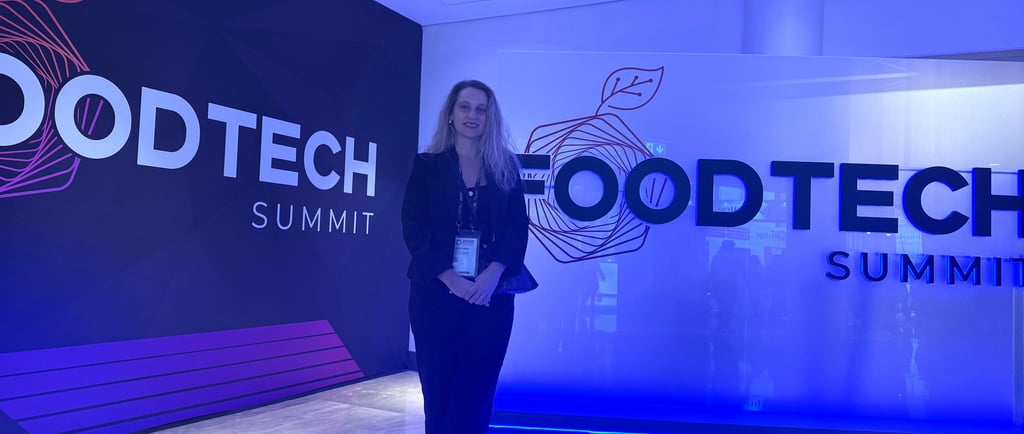
Last month, I spent two full days at the Gulfood Manufacturing show in Dubai, and it is clearer than ever that this event has become the global meeting point for anyone serious about the food and beverage industry. With exhibitors from more than 79 countries and innovations stretching across processing, automation, packaging, sustainability, and now AI, the show sits at the center of the world’s food technology conversation. It is where partnerships are forged, where real projects take place, and where manufacturers catch a preview of what the next decade will demand.
For me, it’s the place where I reconnect with partners, meet new suppliers, scout-out new technologies and industry trends, discover innovations and get inspiration to keep delivering upgraded services and solutions to our clients.
This year, the energy at the show reflected a sector standing at a critical turning point. Today’s food industry carries responsibilities unlike any other time in history:
Preserving local food cultures and passing them on to future generations
Advancing clean labels, sustainable packaging, and responsible sourcing
Promoting circular manufacturing and reducing food loss and waste
Ensuring food safety and food security across growing markets
The encouraging part is that technology has finally matured to support these goals. When applied intelligently, foodtech does not replace tradition or know-how, it elevates them, helping companies build more sustainable and resilient systems while scaling responsibly into the future.
Walking the halls, several themes emerged with clarity:
Automation is now mainstream, with robotics, depalletizing solutions, and modular upgrades accessible to manufacturers of all sizes.
AI has become operational, moving from dashboards to real-time decision-making with tools for anomaly detection, yield optimization, and predictive maintenance.
Packaging innovation is accelerating, driven by recyclable structures, regional sourcing, precision inspection, and aseptic technologies.
Sustainability has become engineering-driven, embedded into energy-efficient boilers, CIP systems, steam management, and waste-valorization and waste-reduction equipment.
A highlight of this year’s show was the Foodtech Summit, an inspiring series of talks and discussions led by global innovators, manufacturers, researchers, and technology companies. The summit explored how AI, automation, robotics, and advanced processing technologies are reshaping the global food sector, moving us toward smarter, more transparent, and more sustainable manufacturing.
Sessions focused on digital transformation, precision processing, future proteins, supply chain resilience, sustainability metrics, and the growing role of data in decision-making. These conversations reinforced what we saw on the show floor: technology is no longer the future of food manufacturing; it is the present, and it is evolving faster than ever.
One of the most important lessons reinforced this year is the value of preparation. Gulfood Manufacturing is immense, and without a strategy, visitors can easily walk tens of kilometers and still miss critical solutions. By organizing my visit ahead of time, mapping exhibitors by hall, stand number, country and technology category, I was able to move through the show in a logical sequence, avoid backtracking, and have far deeper conversations with suppliers. A large tradeshow becomes strategic, not overwhelming, when approached with intention.
All of this points to a pivotal year ahead for food manufacturers. Many businesses are now evaluating how to
-address bottlenecks with targeted automation,
- modernize packaging formats, and
-make production data truly useful at the factory level.
Even small digital steps can lead to meaningful improvements in scheduling, changeovers, and quality outcomes. And as always, shows like Gulfood Manufacturing become most valuable when visited with clear operational priorities in mind.
Technology is not the goal in itself; it is the means by which we reduce waste, strengthen food security, protect culinary heritage, and deliver safer, better products to consumers.
Gulfood Manufacturing 2025 left me more optimistic than ever about the road ahead. The future of food will be shaped by companies that combine innovation with responsibility, and the tools to support this journey have never been more accessible.
For business owners and manufacturing leaders, this is the moment to rethink what is possible and choose the right technologies to shape the future of food.
How can we help with your next project? Drop us an email: hello@theindustrialkingdom.com
CONTACT

The Industrial Kingdom
Berytech bldg., Mar Roukoz, LEBANON
Mobile: +961.3.621813
hello@theindustrialkingdom.com
ADDRESS
2026, The Industrial Kingdom Consulting Services
Phone: +961.4.533040 ext. 2426
©
valerie.zakka@theindustrialkingdom.com