


Value Creation from Biomass (VCB): Turning Nature’s Resources into Sustainable Prosperity
In today’s rapidly changing world where sustainability is at a cross road between environmental focus and business opportunities, biomass is emerging as one of the most diverse and valuable resources available.
Dr. Carl Safi
12/11/20254 min read
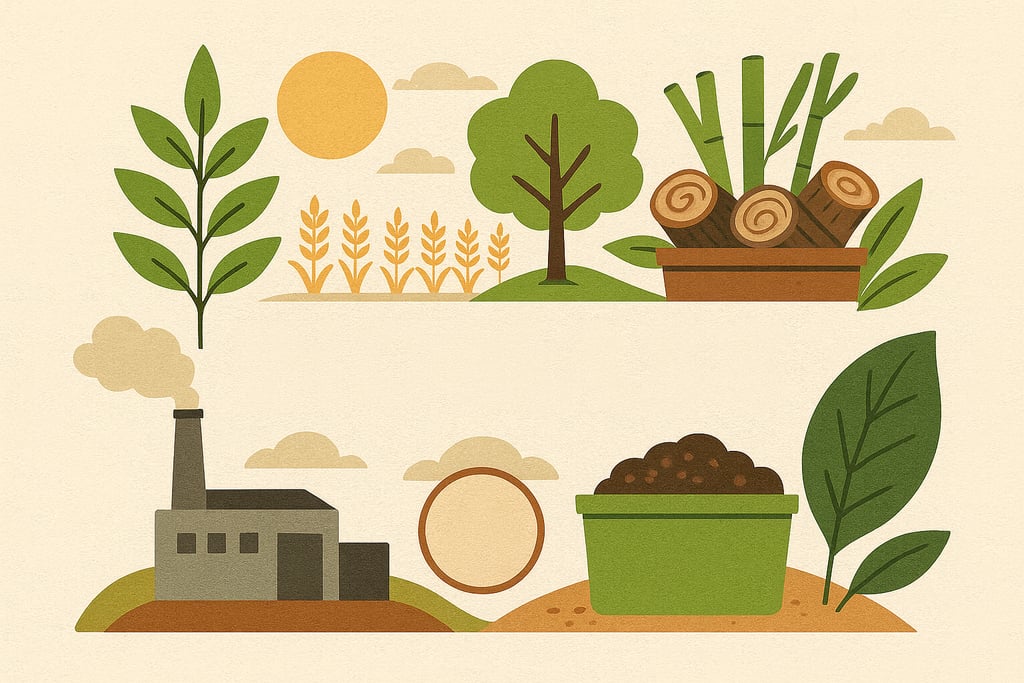
In today’s rapidly changing world where sustainability is at a cross roads between environmental focus and business opportunities, biomass is emerging as one of the most diverse and valuable resources available. From renewable energy to high-value chemicals, ingredients, materials, and even carbon-negative products, biomass offers a pathway to create economic, environmental, and social value simultaneously.
But what does “value creation from biomass” really mean, and why is it attracting such global attention? But first let’s take one step back and understand what a biomass and a biorefinery mean:
Biomass is organic material derived from plants, animals, or microorganisms. It includes:
Agricultural residues (corn stover, wheat straw, sugarcane bagasse)
Forestry residues (sawdust, bark, wood chips)
Organic waste (food waste, manure, municipal organic fractions)
Industrial side streams (brewer spent grain, spent yeast, pomace, oilseed meals)
Marine biomass (seaweeds, microalgae, kelp, sea food leftovers)
Because biomass is renewable and often locally sourced, it plays a critical role in circular and bio-based economies. It contains a wealth of valuable components that are worthwhile valorizing. Therefore, “value creation from biomass” refers to transforming biological materials through a biorefinery process into higher-value products (functional ingredients, food, feed), energy (biodiesel, biogas, SAF, bioethanol), agricultural applications (biofertilizers, biopesticides, biochar) and materials (bioplastics, composites, construction materials). Instead of treating biomass as low-value raw material or waste, the idea is to upgrade it through biotechnological, chemical, or thermochemical processes to create something more useful and economically valuable.
Biorefinery is the biological counterpart of a petroleum refinery, but instead of processing crude oil, it uses biomass as its feedstock to produce a diverse range of valuable products. Its core purpose is to maximize value from every component of biomass by combining mechanical, biological, chemical, and thermochemical processes. Depending on the facility and the biomass, a biorefinery can generate a diversity of products. To achieve this, a selected biomass undergoes a sequence of processes, that are necessary to extract the target components that will be transformed into desired applications. Biorefineries are categorized by feedstock, ranging from:
first-generation: edible biomass, sugar crops, oilseeds
second-generation: lignocellulosic biomass,
third-generation: algae,
fourth-generation: engineered biomass
Their significance lies in supporting decarbonization, promoting a circular economy, enhancing products diversification, driving economic development, and serving as platforms for innovation, producing new biobased chemicals and materials. The biorefinery concept is flourishing and is establishing itself around the world, examples include sugarcane biorefineries in Brazil, corn biorefineries in the U.S. Midwest, and other examples that illustrate the global potential of biorefineries to advance the emerging bioeconomy.
Why It’s Attracting Global Attention?
Value creation from biomass is gaining momentum worldwide because it sits at the intersection of some of today’s most urgent environmental, economic, and technological challenges. First, growing climate and sustainability pressures are pushing governments and companies to cut greenhouse gas emissions, and biomass-based products offer a credible, renewable alternative to fossil-derived fuels and materials. As nations work toward ambitious decarbonization targets, biomass is emerging as a strategic resource. At the same time, countries are seeking greater energy security and diversification. Many want to reduce reliance on imported oil and gas, and locally sourced biomass provides a renewable feedstock that strengthens domestic energy resilience.
Rising concerns around waste management and circular economy goals also play a major role. Cities and industries face mounting pressure to cut waste and improve resource efficiency. Converting biomass - often treated as waste - into valuable products transforms a disposal burden into an economic opportunity. Rapid technological breakthroughs are accelerating this shift. Advances in synthetic biology, fermentation, biorefining, and catalysis now allow biomass to be converted into high-value products with far greater efficiency, opening the door to new materials, functional ingredients, chemicals, and fuels.
Meanwhile, market demand is surging. Consumers and industries from packaging and textiles to aviation, automotive and chemicals are increasingly seeking low-carbon, bio-based alternatives, driving investment and innovation across the value chain. This is complemented by strong rural economic development, as biomass-based industries create new revenue streams and jobs in agriculture, forestry, and regional processing hubs.
In brief, value creation from biomass is attracting global attention because it simultaneously tackles climate change, resource scarcity, energy security, waste reduction, and economic growth. It forms a central pillar of the emerging global bioeconomy.
Case study
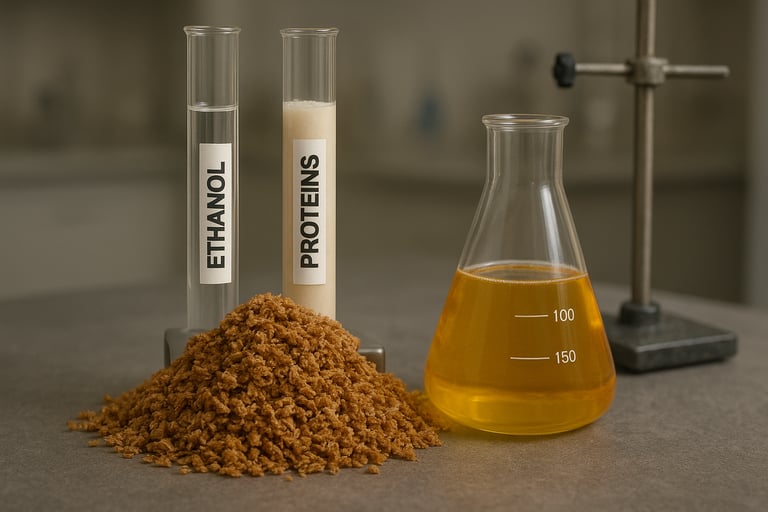
Let’s examine a study carried out by Wageningen University & Research in the Netherlands, where brewer’s spent grains (BSG) were valorized for proteins and ethanol production. The side stream is abundantly available (39 million tons per year) and contains important amounts of proteins and carbohydrates that are suitable for food and ethanol applications. Taking these factors into consideration, a biorefinery process was developed and followed by a techno-economic analysis to assess its industrial viability for processing 20 kton of BSG per year. The results showed a 24% increase in the internal rate of return, which is a significant value creation from a stream traditionally used as low value animal feed.
The same approach was applied on palm kernel meal (PKM), which is also abundantly available with several million tons generated yearly. Similar to BSG, PKM is also rich in proteins and carbohydrates that are suitable for food and ethanol applications. The biorefinery was on the basis of 50 kton of PKM per year. The results showed a 12% increase in the internal rate of return. However, in the case of PKM, the return can be significantly increased by better valorising its carbohydrates, especially mannan for food or pharmaceutical applications. This example implies that the correct selection of target components from a biomass can make a big difference in terms of profitability.
The study indicates that these results are only a starting point; with optimized logistics, correct selection of components from a biomass, an improved value chain, process optimization, and the use of ingredients in high-value applications, the process could become even more sustainable and profitable.
The bottom line is that value creation from biomass is not just another flashy title, it's a platform for multi-dimensional value creation. From ingredients to energy and materials, to carbon sequestration and waste reduction, value creation from biomass helps build resilient, circular systems that benefit people, the environment and businesses. To maximize value creation from biomass, several enablers are essential:
Efficient logistics & feedstock supply chains
Advanced infrastructures and conversion technologies
Policy incentives
Cross-sector collaboration
Investment in biorefineries and infrastructure
Increased awareness socially, environmentally and economically
As industries transition to low-carbon pathways, the ability to turn biomass into high-value products will play a pivotal role in shaping the sustainable economies of the near future. Nordic countries, The Netherlands, Brazil, USA, Germany, South Korea, Singapore, Canada, France, Austria are investing in these systems and are gaining competitive advantage in the global shift toward bio-based economies.
Dr. Carl Safi
Innovation manager at Wageningen University & Research
How can we help with your next project? Drop us an email: hello@theindustrialkingdom.com
CONTACT


The Industrial Kingdom
Berytech bldg., Mar Roukoz, LEBANON
Mobile: +961.3.621813
hello@theindustrialkingdom.com
ADDRESS
2026, The Industrial Kingdom Consulting Services
Phone: +961.4.533040 ext. 2426
©
valerie.zakka@theindustrialkingdom.com